SÃO PAULO BLUES is the studio composing its own city after dark, an original soundtrack and film about São Paulo at night.
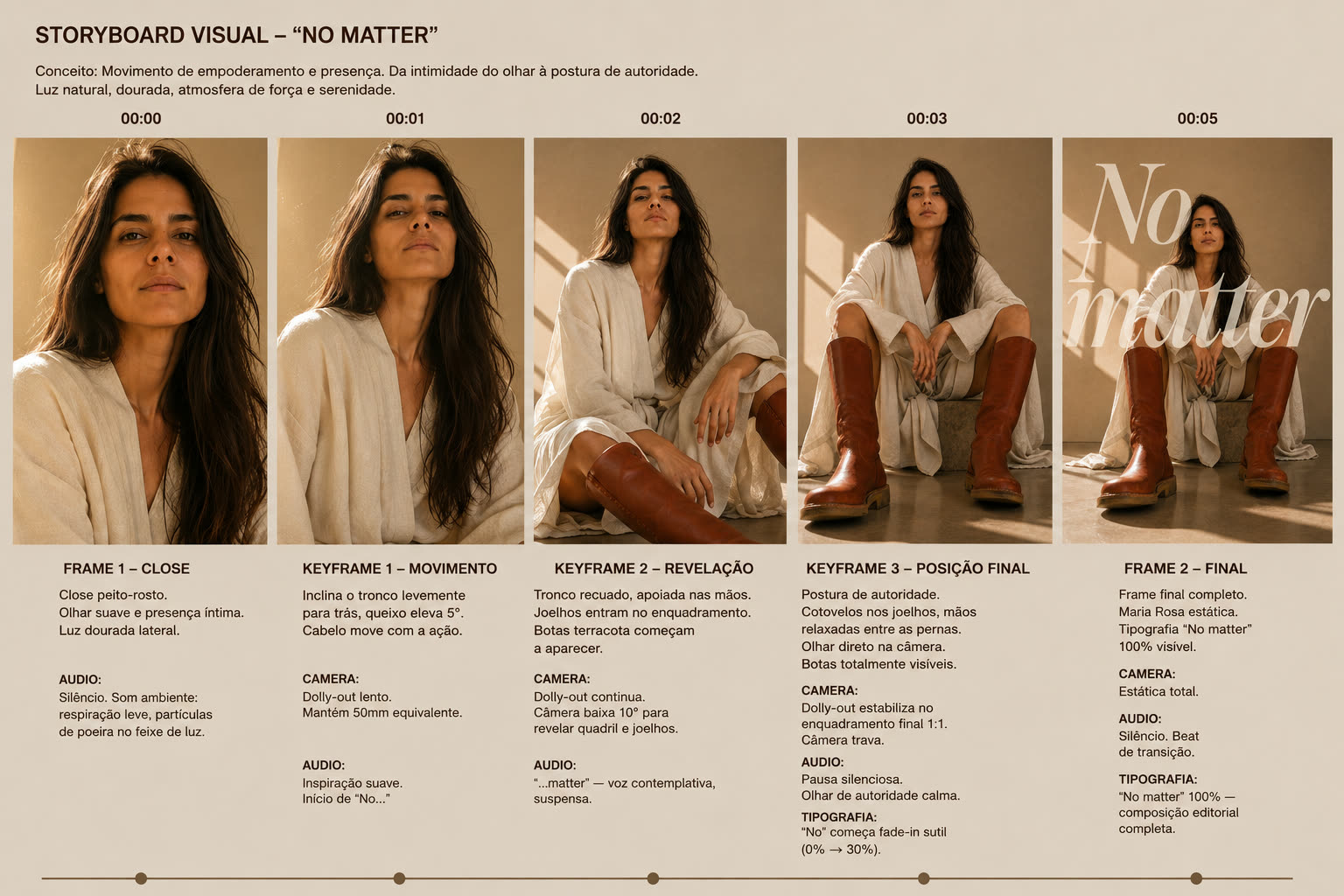
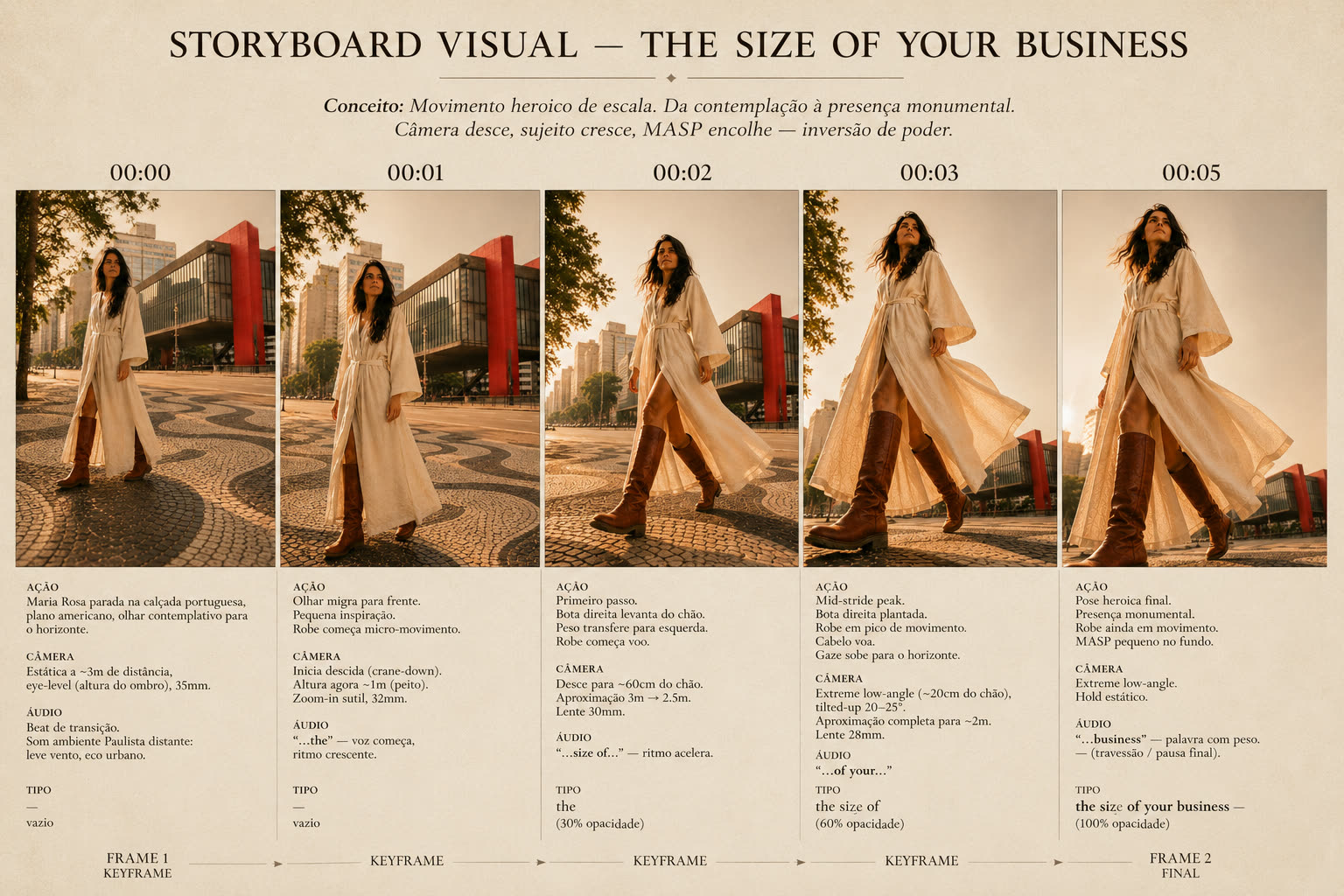
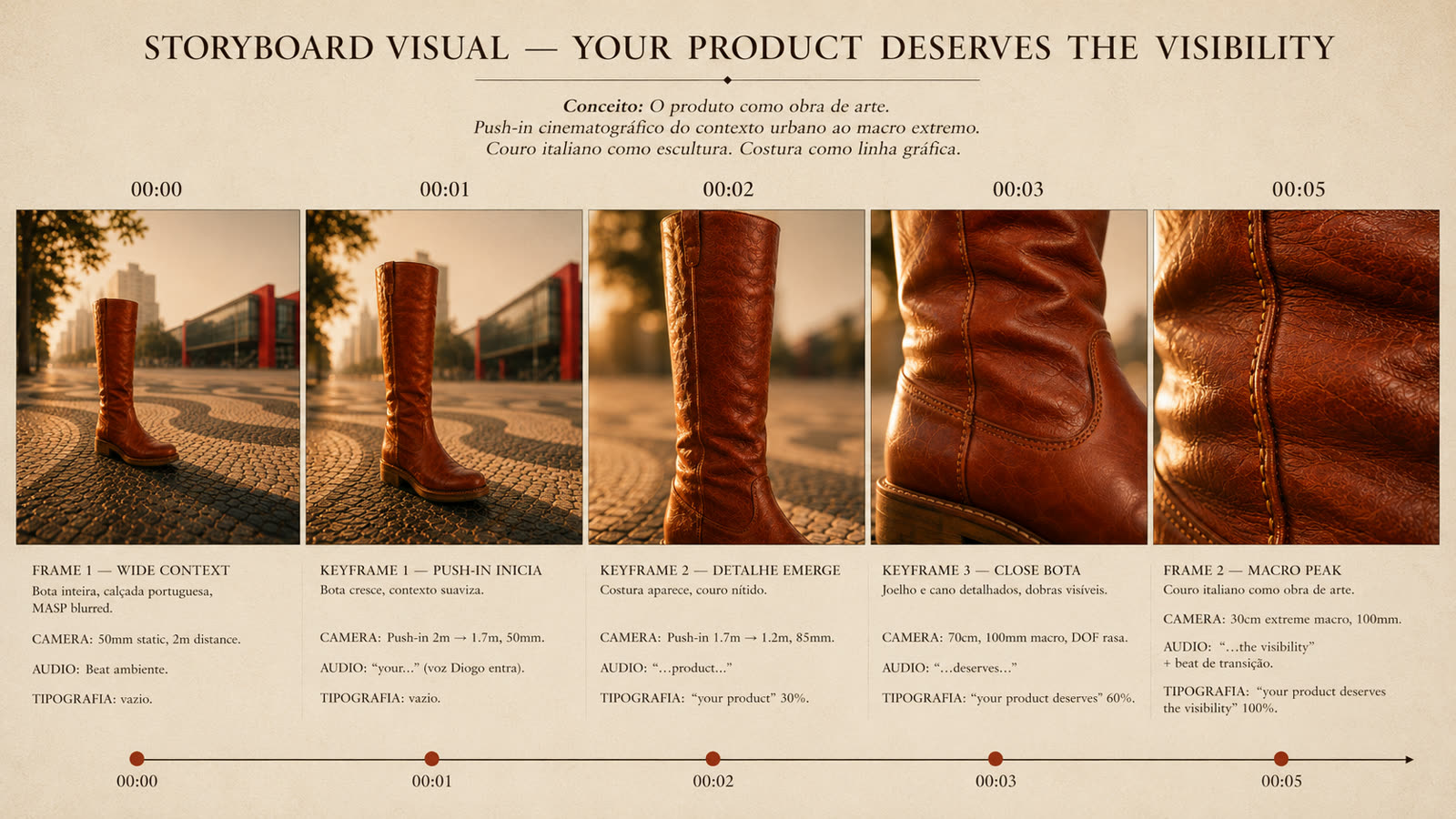
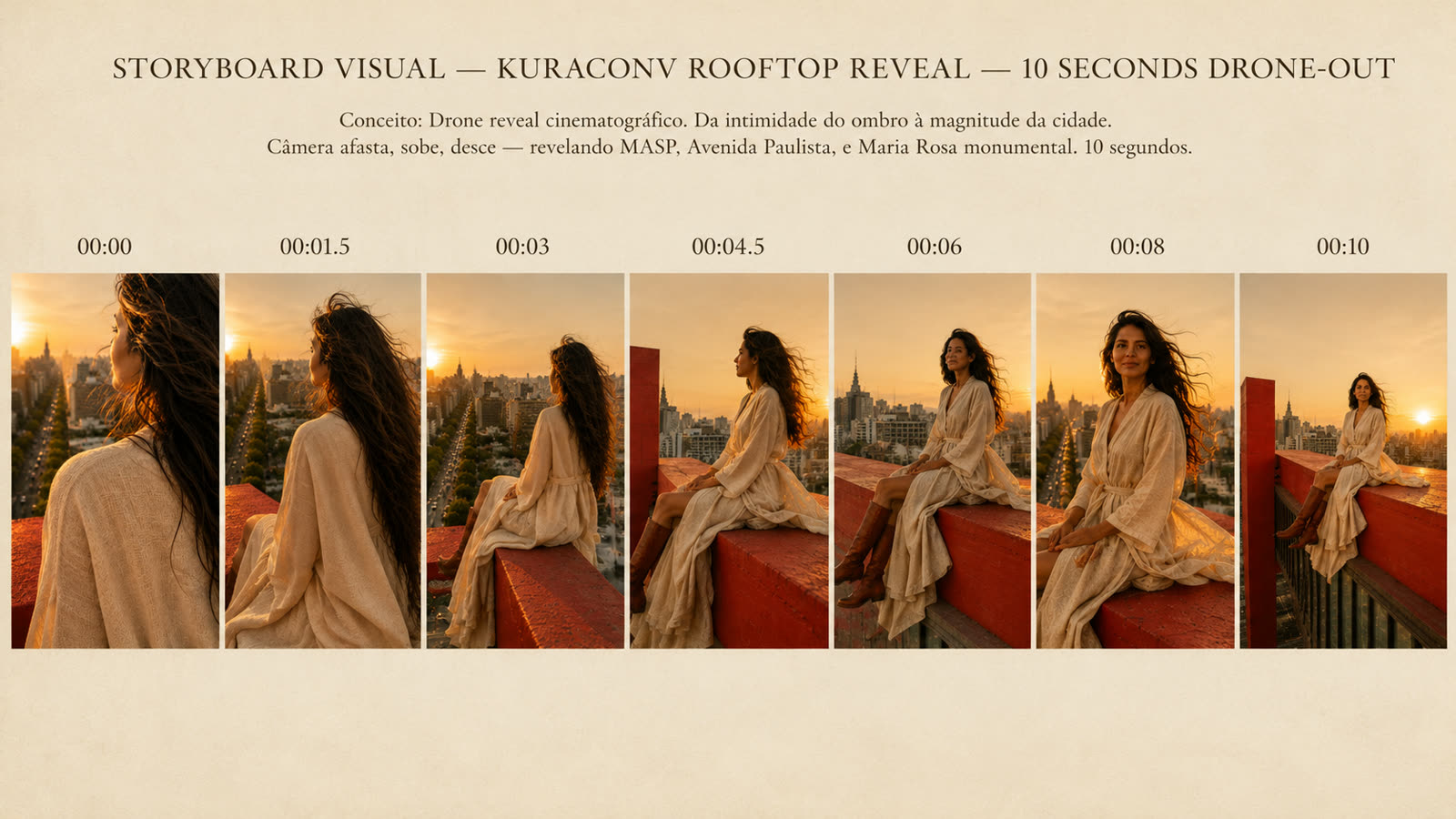
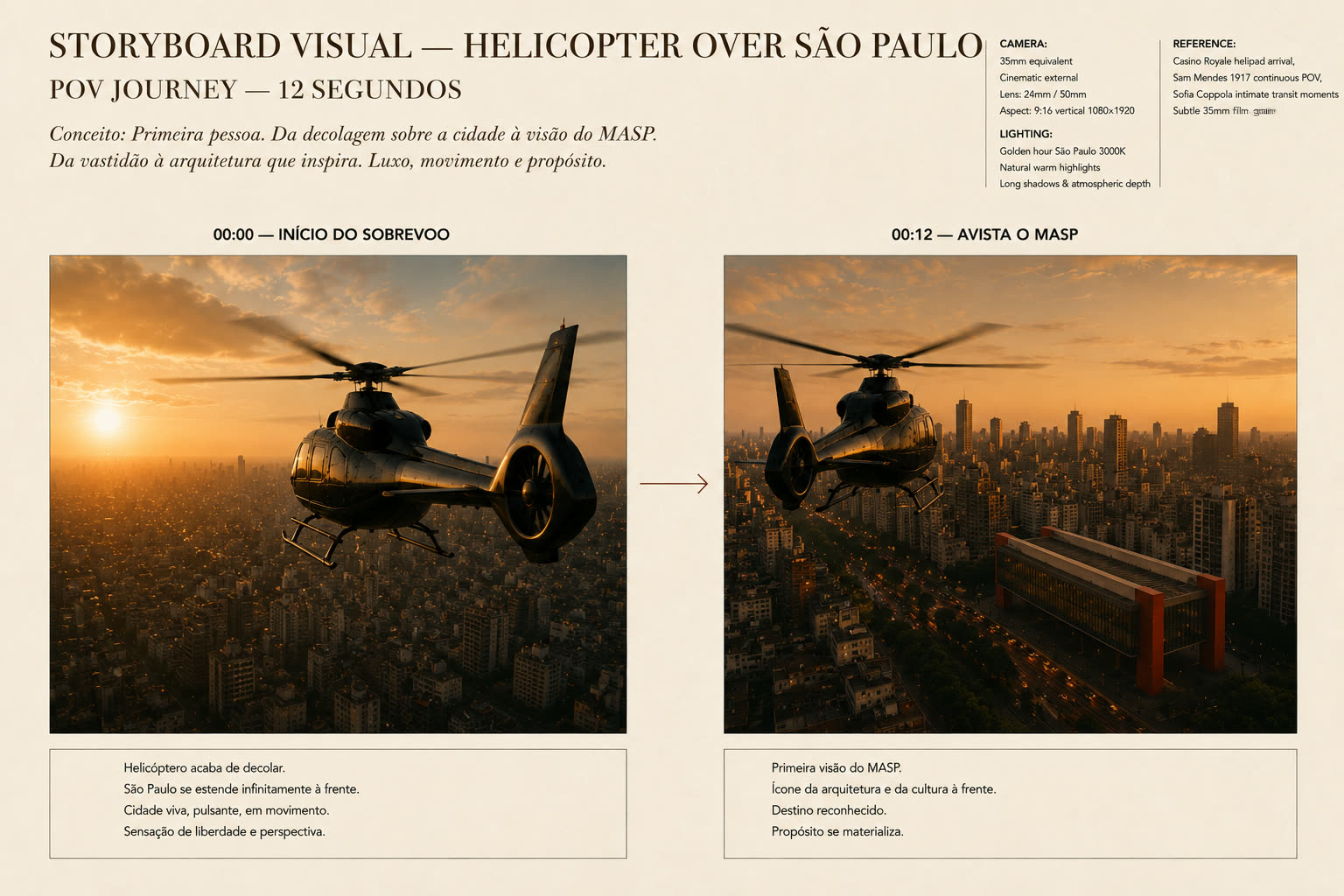
Storyboarded scene by scene before a single frame moved: camera, rhythm, and mood mapped to the music. The film and its score were built together, not licensed apart.
The boards below are the blueprint the film was built on.
§ Direction notesThe city is the lead.
Sao Paulo Blues has one protagonist, and it is not a person. The Centro itself carries the film: the crossing of Ipiranga and Sao Joao, the granilite underfoot, the viaducts, the light that falls between the concrete canyons at 6:30 in the morning as if on purpose. Diogo and Maria Rosa appear only as passing human presence. The film is about the city that was always there.
The camera waits, it does not chase.
The references were Tarkovsky and Lubezki: slow time as an argument, the world moving while the camera holds still, natural light pushed to its limit. And Wong Kar-Wai, the city as an emotional state, light as a character. We let scenes breathe instead of cutting to hold attention.
One test for every frame.
Every frame the AI produced was approved or discarded by the same three questions: is there ether, does the light reveal, is there a deliberate detail. Anything that failed did not make the film, no matter how clean it looked.