Every brand exploring AI video hits the same fork in the road. On one side, the platform AI avatar: pick a face from HeyGen or Synthesia, paste a script, get a talking head in minutes. On the other, a directed character: an original face, designed and owned by the brand, performed shot by shot under actual creative direction.
Both are legitimate tools. But they solve different problems, and choosing wrong costs you either money or identity. At KURACONV we build both kinds of work, so this is not a takedown of avatar platforms. It is a map of when each one earns its place.
What a platform AI avatar does well
HeyGen, Synthesia and their peers are speed machines. They shine when the job is information delivery at volume: internal training, product update videos, multilingual support content, onboarding sequences. The avatar is a presenter, the script is the product, and nobody expects the face to carry meaning.
For that job, they are unbeatable. You get consistent lip sync, dozens of languages, and a turnaround measured in minutes. If your brand needs 40 versions of a compliance video by Friday, this is the tool, and pretending otherwise would be dishonest.
The limits show up the moment the face has to mean something. Platform avatars are shared assets. The same presenter who explains your product explained a competitor's product last Tuesday. The framing is fixed, the energy is fixed, and the camera never moves with intention. You are renting a face, and rented faces build no equity.
What an AI spokesperson built as a directed character does
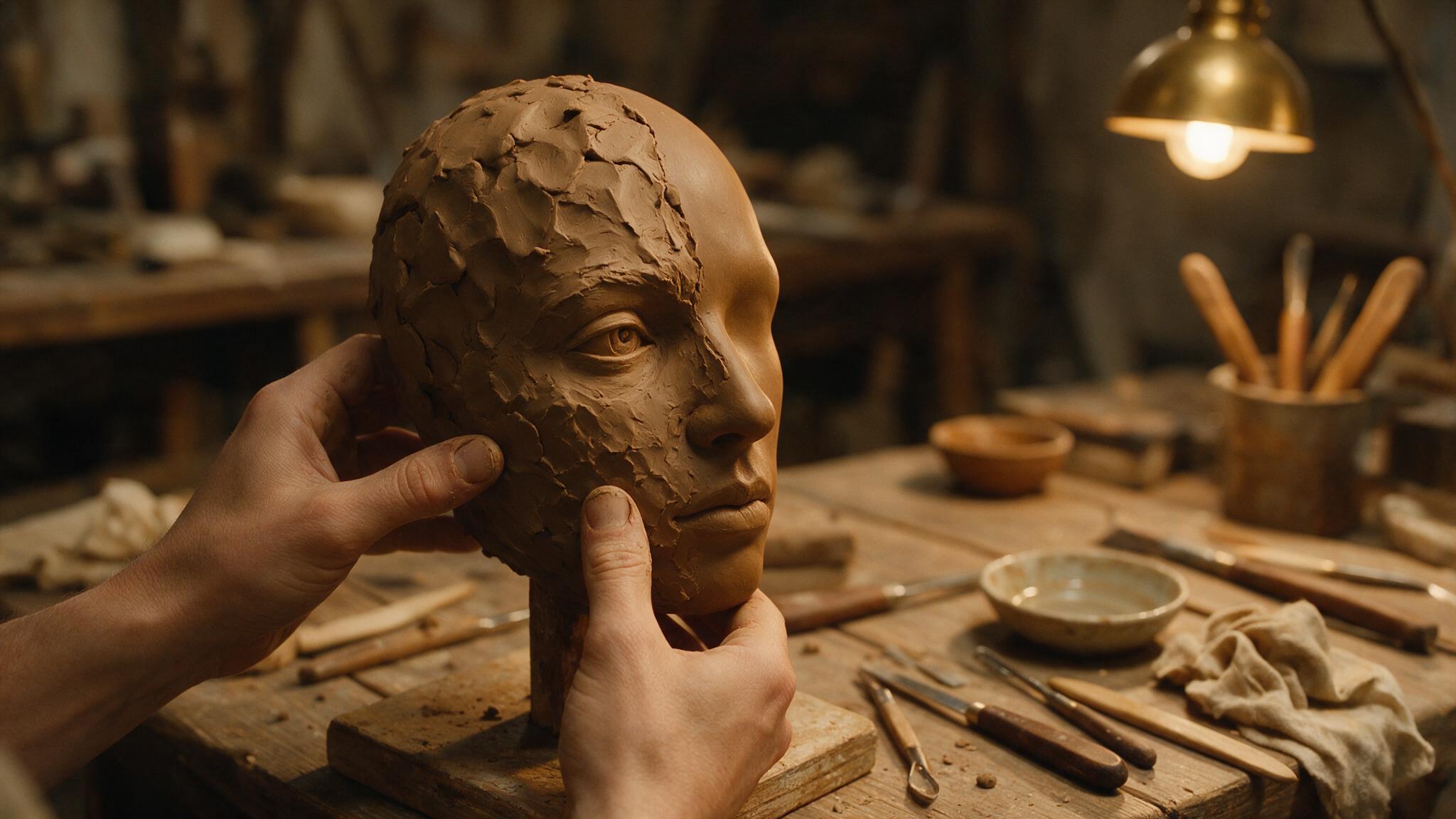
A directed character is different in kind, not just quality. It is an original face and body designed for the brand: features, wardrobe, posture, the way light sits on the skin. Nobody else can use it. It appears across campaigns, ages with the brand, and accumulates recognition the way a mascot or a long-running brand ambassador does.
More importantly, a directed character is performed. In our workflow the voice comes first: timbre, pace and accent are designed as brand elements before a single frame is generated, and the visual performance is built around that voice. The character can whisper in one film and command in another. It can be shot from below in a moment of authority and in extreme close-up in a moment of doubt.
Avatars talk. Characters act.
There is also a legal and strategic dimension. A face you design is a face you own. No platform terms change, no presenter library rotates, no competitor shows up next quarter with your spokesperson's twin.
The craft problem nobody mentions: duplication and staging
Here is a lab detail that separates directed work from prompt work. Suppose your film needs the character twice in one frame, talking to themselves, or a scene where the character sits opposite an empty chair that another version will fill. Prompting an engine with negative instructions to avoid a second random person fails constantly.
What works is composition: generate the scene with a symmetrical empty seat, generate the second performance separately, and composite them like a VFX house would. That is direction. It is invisible in the final film and it is precisely the kind of decision an avatar platform cannot make for you, because the platform does not know your film exists.
How to choose between an AI avatar and a directed character
Ask three questions.
First, is the face the message or just the messenger? If the video works equally well with any competent presenter, use a platform avatar and save the budget. If the face needs to be remembered, associated with the brand, or emotionally load-bearing, you need a character.
Second, how long will this face live? A one-off explainer does not justify character design. A spokesperson who will front campaigns for two years absolutely does, and the design cost amortizes across every appearance.
Third, who is watching? Internal audiences forgive template energy. Customers on a purchase decision do not. Our buyer research consistently shows that audiences cannot always articulate why avatar content feels generic, but they behave as if they know: watch time drops, trust scores drop, and the brand reads as smaller than it is.
The honest hybrid
Plenty of brands should run both. Platform avatars for the operational layer: support, training, versioned announcements. A directed character for the brand layer: campaigns, launches, the films that define how the company feels. The mistake is not choosing one tool. The mistake is letting the operational tool wander into the brand layer because it was already paid for.
What working with a studio looks like
When we design an AI spokesperson, the process runs like casting plus character design. We research the audience before sketching a face, because who buys decides who speaks. We design the voice before the body. We build a character sheet the engines can reproduce consistently, then direct each appearance shot by shot: framing, light, rhythm, silence. The result ships in days, not weeks, but it ships directed.
Use platform avatars for operational information at volume, and an owned, directed character wherever the face has to carry the brand: rented faces deliver scripts, directed characters build equity.