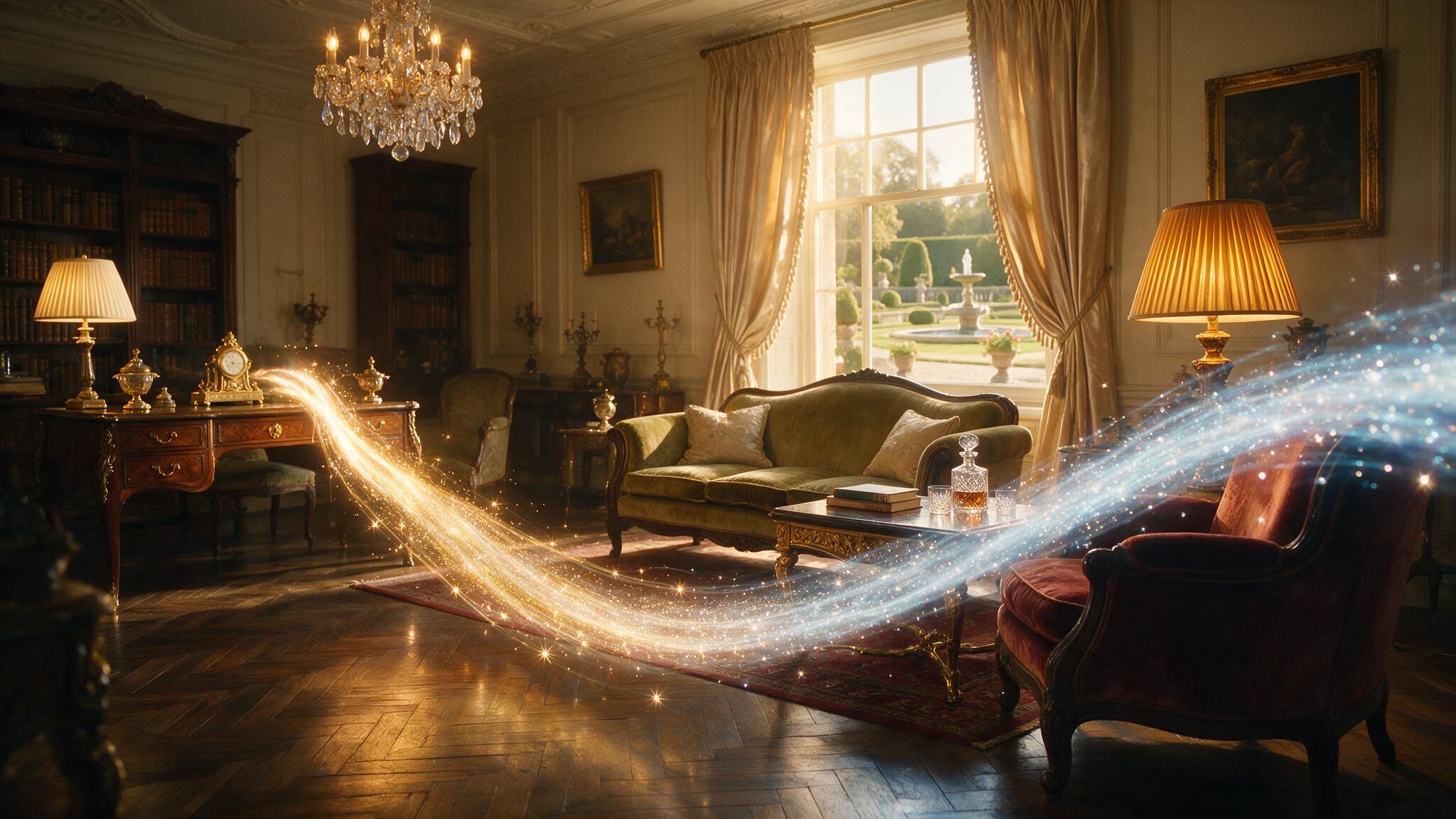
Most AI video still thinks in fragments. Generate four seconds, generate another four, stitch them in the edit, hide the seams with a cut. It works, but it thinks like a slideshow. Cinema thinks in shots that travel: the camera moves, the world changes, and the audience never feels the splice.
In our lab we tested whether an AI long take is actually directable today, not as a lucky accident but as a repeatable setup. The answer is yes, and the method has a name in our studio: shot fusion with anchor frames.
The three anchors: start, references, end
The architecture came out of controlled tests on Seedance 2.5, isolating what each input actually governs. Three anchors, three jurisdictions:
The start frame governs the world. Feed an image as the start frame and the engine honors it as frame one: the light, the space, the composition. It is the establishing contract of the shot.
References govern the object. Reference images anchor identity: the product, the character, the key prop. Whatever must survive the motion travels in this channel, because the engine preserves what it receives as reference and reinvents what it merely reads in a prompt.
The end frame governs the destination. Feed a second image as the end frame and the shot now has somewhere to go. The engine plots a journey from the start world to the end state, and transformation stops being a hallucination risk and becomes a directed arc.
Once you hold all three, you are no longer prompting clips. You are directing a shot with a beginning, a protected subject, and an ending.
The 14 second test: transformation and movement together
The proving run: a 14 second shot built from one start frame, four reference images, and one end frame. The brief demanded the two things engines usually refuse to do simultaneously: transformation of the subject and movement through the space, inside a single unbroken take.
It held. The world established by the start frame stayed coherent while the camera traveled. The references kept the subject recognizable through the change. The end frame pulled the transformation to a precise landing instead of letting it smear into noise. Fourteen seconds, one shot, no cut hiding anything.
Engines fail at transformation when they have to invent the destination. Give them the destination as pixels and the middle becomes interpolation with style.
AI video transitions without cuts
This reframes what a transition even is. The standard AI workflow treats transitions as an editing problem: clip A, clip B, and a cut or dissolve between them. Shot fusion treats the transition as content. The change happens inside the shot, on camera, the way a practical filmmaker would stage a reveal.
Day to night on the same product. A sketch becoming the finished object. An empty room furnishing itself as the camera pushes in. Each of these is one start frame, one end frame, references guarding whatever must not drift, and a prompt that directs the motion between them. The audience experiences a transformation, not a transition, and the difference reads as production value.
Two direction rules from our sessions keep it honest. First, the start and end frames must plausibly belong to the same world: same lens logic, same light family. Anchors that contradict each other tear the shot in the middle. Second, the prompt spends its words on the journey, not on re-describing the endpoints. The frames already speak; the prompt moves.
The economics: why fusing shots is cheaper
Here is the unglamorous finding that changes budgets. Engines bill with a minimum clip duration, typically four seconds. Ask for a two second insert and you pay for four. A film built from many short clips pays that rounding tax on every single shot.
Shot fusion inverts the math. One 14 second fused take replaces what would have been four or five short clips, each dragging its four second floor, plus the editing time to disguise the seams. The longer directed shot costs less per usable second and delivers a stronger result, because the coherence is generated, not patched.
So the studio rule we now apply at the planning stage: before boarding a sequence as separate clips, ask whether adjacent beats can fuse into one anchored shot. Whenever the world is continuous, fusion wins twice, aesthetically and financially.
What this demands from direction
None of this is automatic. The engine still loves to fly over the subject, still drifts when the anchors are lazy, still needs a director deciding what each channel carries. Shot fusion is not a feature you toggle; it is a way of planning shots that treats generation like cinematography.
That is the Sentimagem posture, direction over generation: learn what each anchor actually governs through tests, not folklore, notice where a shot loses its subject or its destination, and build the setup where transformation and movement live in the same take.
The fragment era of AI video is ending. The studios that learn to direct long, anchored shots will simply look like they had a bigger production.
Shot fusion with anchor frames turns AI video from stitched fragments into directed long takes: the start frame governs the world, references guard identity, the end frame sets the destination, and the fused shot costs less per usable second.