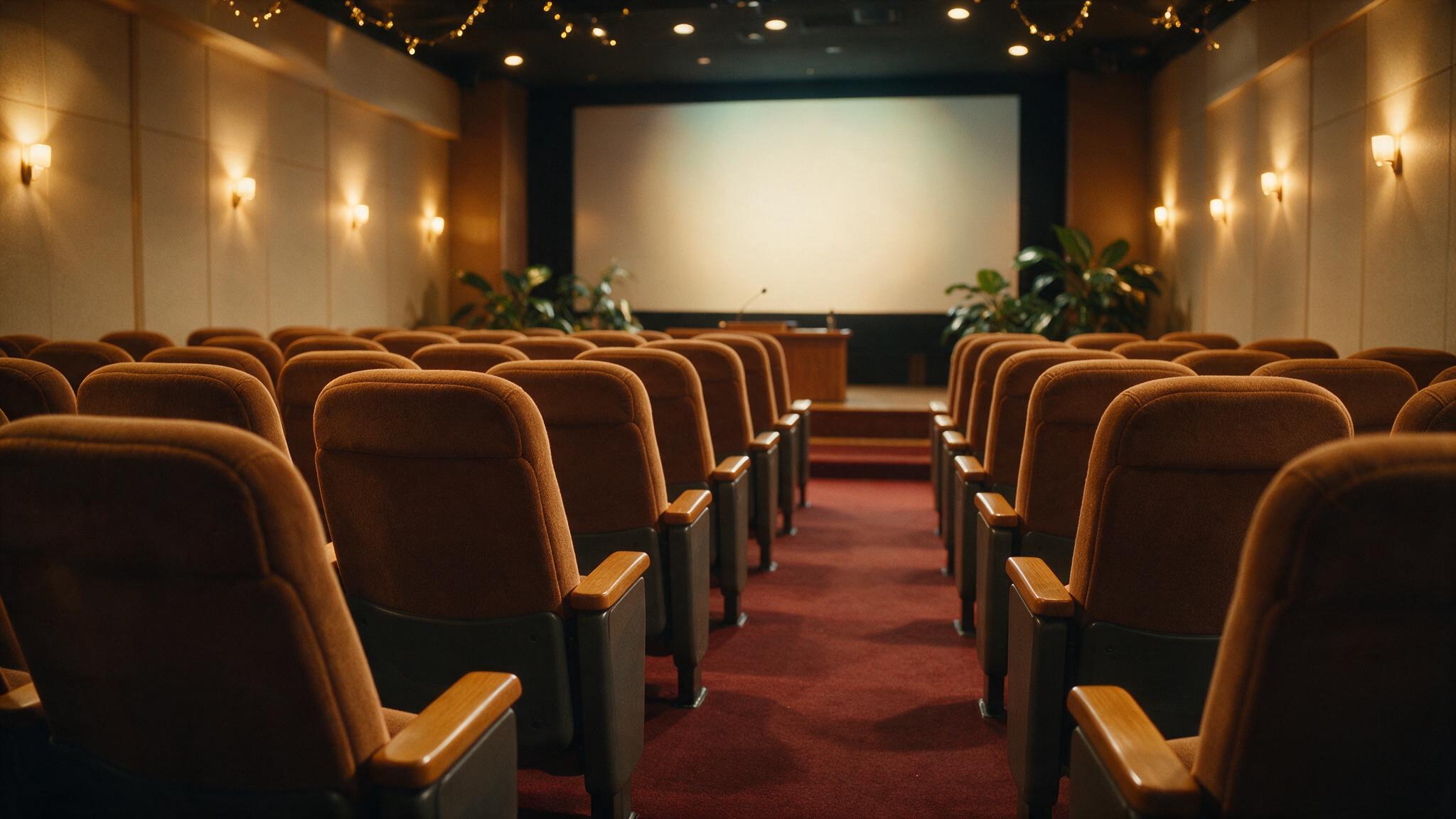
Most corporate training video dies the same death. It is expensive to produce, so it gets produced once, then reused until the dress code in the video is two policies old and the office in the background no longer exists. New hires can feel it. Nothing says we will also neglect you like an onboarding video from another era.
AI video changed the economics of this problem completely. But it also introduced a new way to fail: training content that is technically fresh, endlessly scalable, and looks like it could belong to any company on Earth. Scale without identity is just noise at a lower cost. The real craft is scaling with your company's face intact.
AI training video: what actually changed
The old math was brutal. A crew, a location, on-camera talent, an edit suite. Result: one video, updated never. The new math is different in kind, not just in degree. With an AI production pipeline you can:
- Update a module in days when a policy or product changes, instead of reshooting.
- Localize into every language your teams speak, with designed voice, not robotic text-to-speech slapped on as an afterthought.
- Produce role-specific versions: the same safety module framed for the factory floor and for the field team, because a warehouse example means nothing to a sales rep.
- Keep one consistent presenter, a designed character with a stable face and voice, who never changes jobs, never ages out of the footage, and never needs a release renegotiated.
That last point deserves care. If you use a real employee's face and voice, you need proper consent that covers synthesis, and you inherit a problem when they leave. A designed presenter, built for your brand, sidesteps the issue and can become an asset: the recognizable guide every employee knows from day one.
AI corporate video without the corporate flavor
Here is the uncomfortable truth about most AI corporate video: it looks generated. Not because the technology is weak, but because nobody directed it. Someone typed professional office, diverse team, modern and got exactly that: the average of every office ever photographed, belonging to no one.
Your company has a face. It lives in specific things: the actual color language of your brand, the way your product looks in real hands, the vocabulary your people use in the corridor, the rhythm of how your culture explains things. None of that appears by accident in a prompt. It appears through direction.
At KURACONV we call the method Sentimagem, and it rests on three pillars. Presença is mood coherence: for training content, that starts with researching how your company actually communicates internally, not how the industry template says it should, so onboarding feels like a welcome rather than a compliance briefing, like the first good conversation at a new job. Engenharia is camera direction in motion, so the film moves with intent instead of drifting like stock footage. Narrativa means the story engine comes first: the information lands through images that belong to your world, so the knowledge arrives attached to your identity. Direction over generation, even for module fourteen.
The pipeline that keeps quality from drifting
Scale is where quality quietly dies, one module at a time. Module one gets love, module fourteen gets a template. The defense is a real production pipeline, the same one we run for brand films:
- Research. Understand the material, the audience, and the company's actual voice.
- Script. Written to be heard, not read aloud from a policy PDF.
- Storyboard with animatic. The board proves the framing, the animatic proves the rhythm. Yes, even for training content. Especially for training content, because pacing is the difference between retention and background noise.
- Directed generation. Shot by shot, with your brand's visual system as law, and faces generated at native resolution because a waxy presenter erodes trust in the material itself.
- Designed sound and voice. Voice is a casting decision. The presenter's voice becomes part of your company's identity, so it gets chosen, not defaulted.
- Delivery in every format and language the rollout needs.
A training film that teaches your process in someone else's voice fails at its only job.
The strategic content is always yours. Our research and craft serve your knowledge and your culture; we do not import a script from outside and paint your logo on it.
Where the savings really are
Clients expect the savings to be in production cost per video, and they are real. But the bigger economics are elsewhere:
- Maintenance. The most expensive training video is the outdated one still playing. AI production makes updates a line item instead of a project.
- Consistency at scale. Fifty modules that feel like one curriculum, one voice, one visual world. That coherence used to require a broadcast budget.
- Speed to competence. A well-paced, well-directed module gets watched to the end. Completion and retention are the actual ROI, and they respond to direction, not to runtime.
One honest cost note: AI engines bill by the second with minimums, so the discipline is in the edit, not in generating everything and choosing later. Direction before generation is the cheapest decision in the entire pipeline.
AI makes training video endlessly updatable and localizable, but scale without identity is just cheaper noise; the modules that get watched are the ones directed with your company's actual face, voice and rhythm.