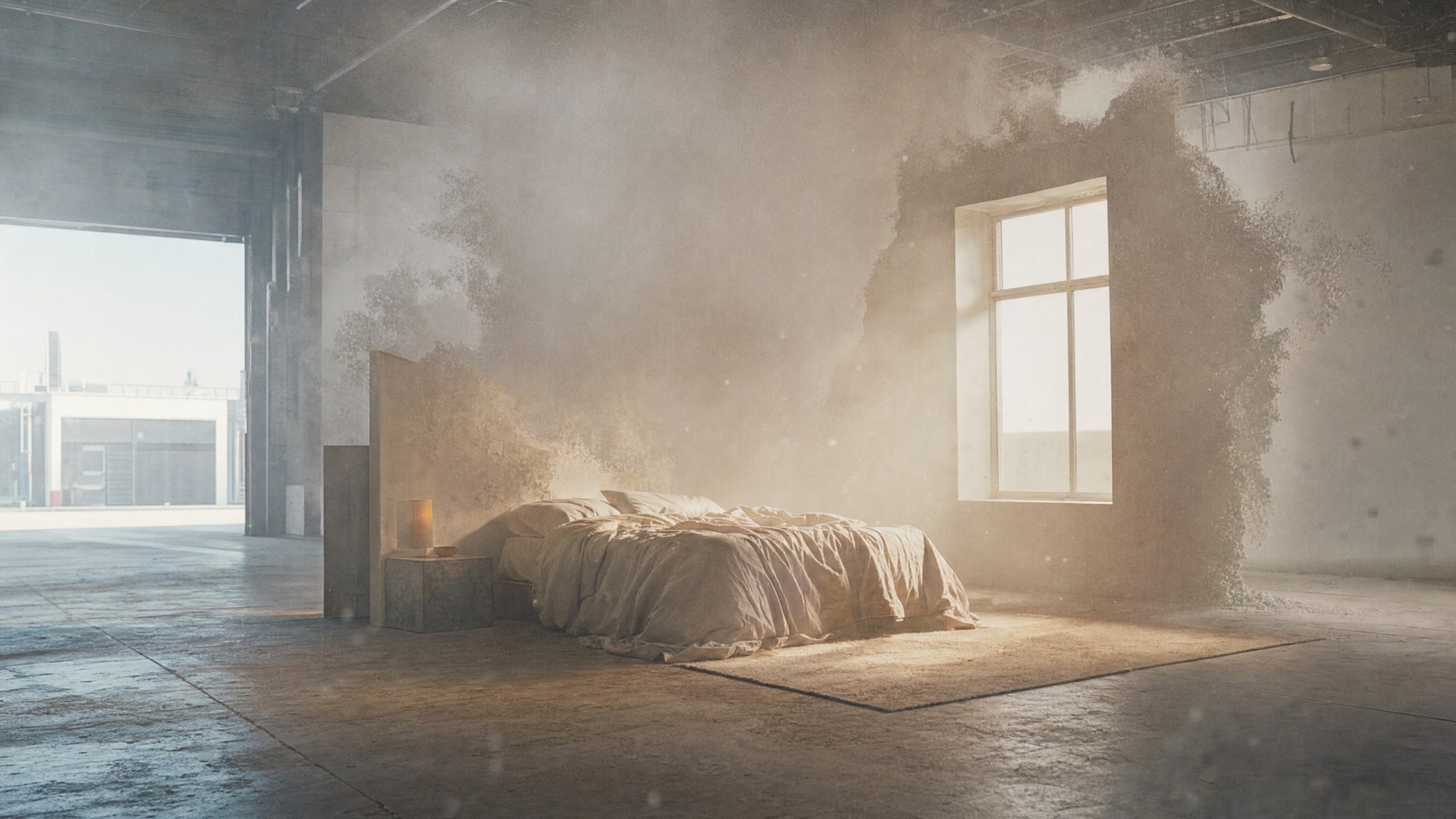
Hospitality is the hardest category of unbuilt project to communicate, and the reason is structural. Nobody buys a hotel room. They buy a version of themselves that exists only in that place, for a few days, and they buy it in advance, as a memory they have not had yet.
You are therefore not selling a property. You are selling an anticipated memory of a place that does not exist. Renders are almost useless for this, because a memory has weather in it, and other people, and a time of day, and something that happened.
Three audiences, three different films
Pre-opening hospitality has an unusually crowded set of stakeholders, and each one is deciding something different.
- The operator or brand is deciding whether the property fits their standards and their guest. They need coherence and a clear position.
- The investor is deciding on the case, and needs conviction that the identity is real and defensible.
- The early guest, the travel press, the agent, the trade audience are deciding whether to want it, and they need desire and specificity.
One film for all three is the standard approach and it is why most pre-opening films are forgettable. They average the three audiences into a piece that is aspirational enough to be vague and informative enough to be dull.
The property is not the subject
The most common structural error is a film organised around the asset: exterior, lobby, room, restaurant, spa, pool, exterior at dusk. This is a tour. Nobody has ever fallen in love with a tour.
The alternative is to organise around a stay. Arrival at the end of a long journey. The specific quality of the first morning. The hour when the light changes and the place becomes something else. Departure, and what you take with you.
The rooms still get shown. They get shown while something is happening, which is how anyone remembers a room they liked.
The details that carry the most weight
In hospitality, credibility lives at very small scale, and it is almost always textural rather than architectural.
- What the floor sounds like under a bare foot.
- The weight of a door and how it closes.
- Where the light falls on a bed at seven in the morning, and whether anyone has thought about that.
- What you hear from the room. Not silence, which is a claim nobody believes. The right sound.
- The temperature of the shade.
These are the things guests actually describe when they recommend a hotel, and they are entirely absent from the way hotels are usually sold before opening.
Location is a character
A resort that could be anywhere is worth less than one that could only be where it is. This is true commercially and it is true in the film. The surrounding place, its light, its noise, its particular vegetation and materials, is not context around the property. It is a reason to travel.
A pre-opening film that spends real time outside the plot boundary is usually stronger than one that never leaves it.
The line you cannot cross
A film about an unopened property makes claims about an experience nobody has had. Finishes change, suppliers change, a view can be altered by a neighbouring development, a restaurant concept can be replaced before opening.
So the discipline is to be specific about what is settled and evocative about what is not. Show the material that is signed. Suggest, rather than document, the things still in motion. Anything presented as fact should be a fact, and where the film is illustrative it should be labelled as such in the material around it.
This is not only compliance. A film that overclaims sets an expectation the property has to meet on day one, and hospitality is a business where the gap between the marketing and the arrival is the single most reliable source of a bad review.
The best time to make it
Earlier than most groups do. The identity work that a film forces, deciding who this is for and what the stay actually feels like, is more useful during design than after it. Several of the strongest projects we have seen used the film process as a way to settle arguments about positioning that had been circling for a year.
What a production looks like on this kind of project is on the unbuilt projects page.
Hospitality is bought as an anticipated memory, so organise the film around a stay rather than a tour of the asset, treat the location as a character, and be specific about what is settled while staying evocative about what is still in motion.
Pre-opening timelines are unforgiving. The earlier the conversation, the more the film can do.
Talk to us